

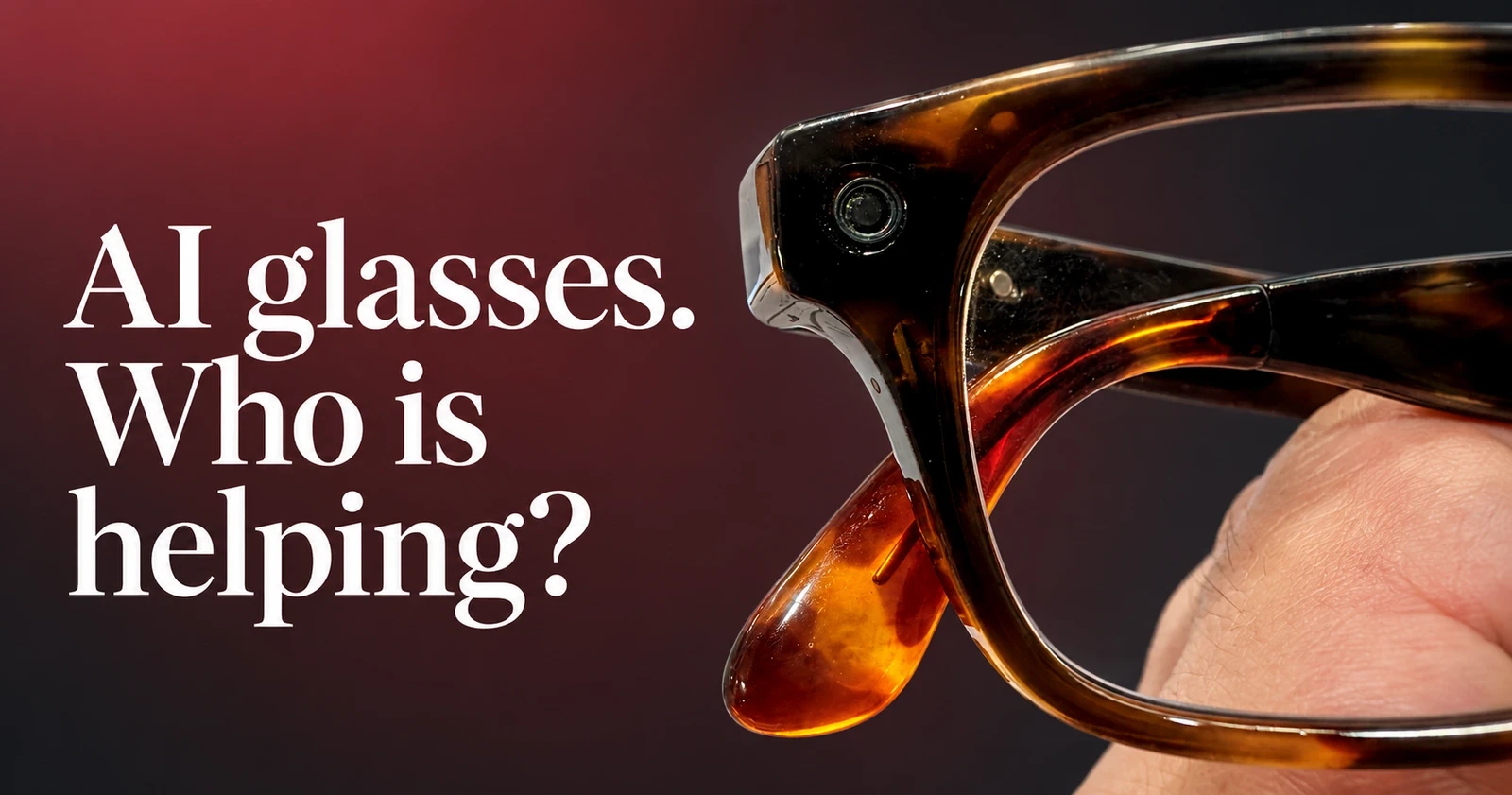

Smart glasses for sight loss can put two quite different sources of help behind a voice command: a system that generates a description, and a video connection to another person. The glasses may be the same, but the response comes from a different place.
That distinction is useful when understanding supported Meta glasses and Be My Eyes. “AI glasses” describes the hardware category; it does not mean that every answer heard through the glasses was generated by AI.
A description and a conversation are different services
RNIB describes hands-free access to text, information and descriptions as potential benefits for blind and partially sighted people. It also notes the option of connecting to remote sighted assistants.
In a generated-description interaction on the supported glasses, Meta AI produces the response. In a live Be My Eyes assistance call, a person views the camera feed and talks with the wearer. Asking a follow-up question may sound similar in either case, but it is being handled by a different kind of service.
RNIB gives reading a restaurant menu as one example of a hands-free task. An AI description supplies generated information about what the camera sees; a live caller can discuss the scene with the wearer. These are documented uses, rather than results from testing by Healthcare Edition.
The distinction is about who supplies the assistance. It does not establish that one route is accurate in every situation or that a live caller has particular professional qualifications.
Be My Eyes connects to more than volunteers
In its March 2026 announcement, Be My Eyes described expanded hands-free connections on Ray-Ban Meta and Oakley Meta glasses. Alongside volunteers, the announced routes include trusted groups of friends, family or colleagues, and participating companies through a service directory.
These options serve different relationships. A trusted contact is someone selected by the user. A volunteer is a different connection. A company representative supports the services available through that company’s directory entry. They should not be presented as interchangeable sources of specialist advice.
The announcement describes an implementation and the supplier’s intended uses, rather than an independent comparison of response accuracy or everyday reliability.
Compatibility has several layers
The Be My Eyes FAQ excludes the older Ray-Ban Stories glasses and names supported Ray-Ban and Oakley Meta AI models. Its country list includes the UK, Ireland and a number of other European countries, as well as countries outside Europe.
Country support does not settle language support: the service says voice-command availability also depends on the language selected for Meta AI. The phone remains part of the connection, routing calls while communicating with the glasses.
This makes compatibility more specific than whether the glasses can be bought locally. The relevant questions include the exact model, phone/app setup, service country and supported voice language. Availability for one function should not be taken as proof that every directory or AI feature works in the same place.
Privacy is part of accessibility
RNIB’s position stresses visible recording indicators, understandable data practices and privacy controls that are themselves accessible. It also warns that blanket venue bans can exclude people who use the glasses as assistive technology.
Those concerns belong alongside the feature comparison. A wearer needs to understand both what is being shared and who is receiving it: a generated response, a volunteer call and a conversation with a chosen contact are different interactions.
The documents describe useful assistance options. They do not establish restored vision, validated navigation safety or a replacement for every other mobility aid. Understanding which source of help is active is the first step in understanding what the glasses are actually doing.