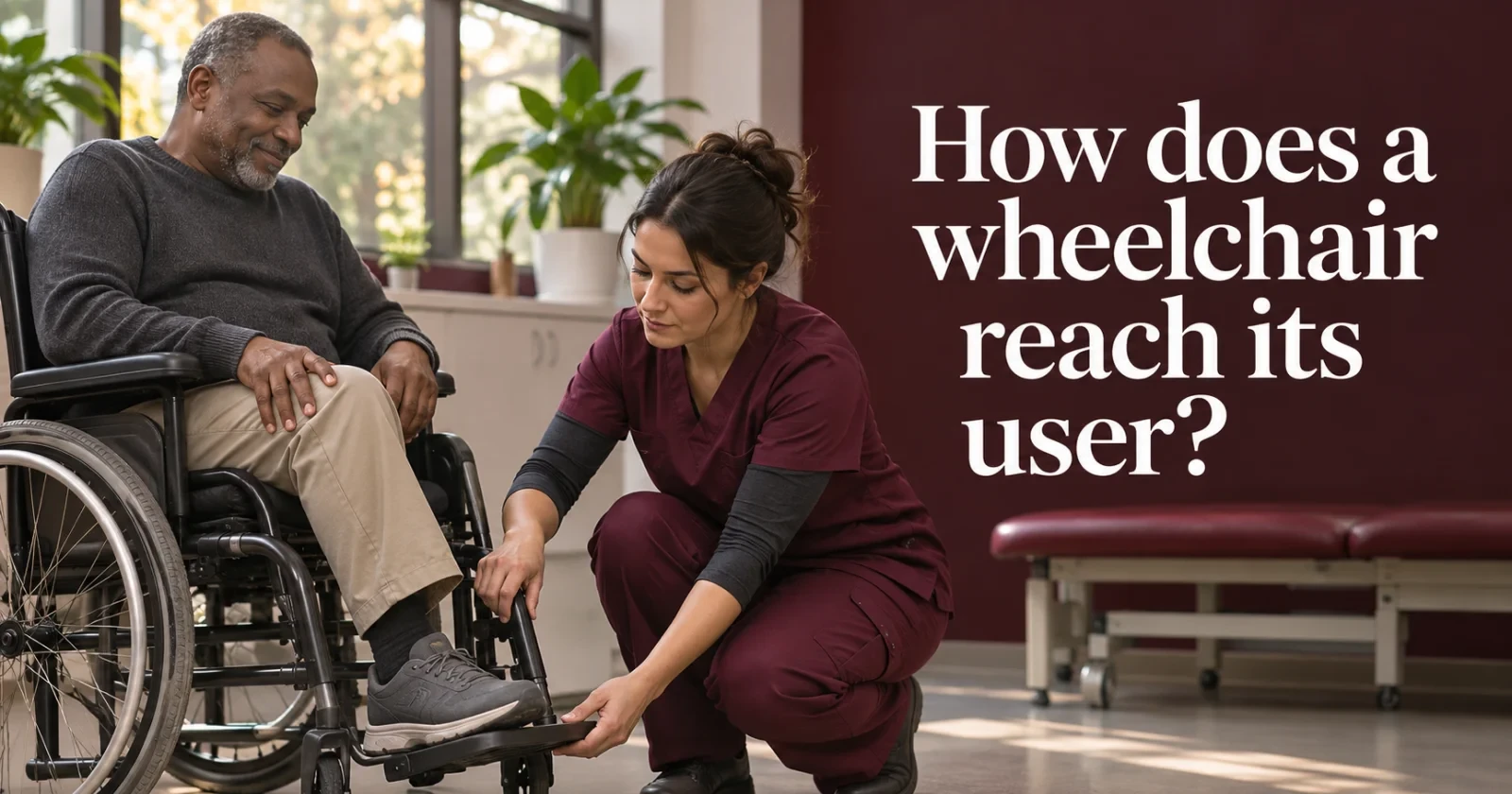
Putting a wheelchair on a national priority list makes it visible to the people planning services and buying equipment. A person still needs a way to reach a service, get a suitable product fitted and have it repaired. The World Health Organization’s South-East Asia office used its November 2026 workshop to connect these jobs, calling for lists to be backed by budgets, procurement, trained staff and support throughout a product’s life. WHO regional announcement
Follow a wheelchair from the list to the user
A list identifies the kinds of products a country wants its system to make available first. It can give purchasers a common starting point for deciding what to order and services a basis for organising how equipment will reach people. A wheelchair illustrates the decisions that continue after its category is listed: who assesses what is needed, where fitting takes place and who can arrange a repair. WHO regional announcement
| Step | Bhutan’s national document | Nepal’s national document |
|---|---|---|
| Plan what to provide | Sets out priority products and a proposed service delivery model. | Describes priority products alongside specifications and planning guidance. |
| Connect the person to a service | Describes referrals across primary, district and regional services, with a proposed specialist centre. | Sets out a model spanning policy, products, personnel and provision, including local referral links. |
| Support the product in use | Includes assessment, fitting, user training, follow-up and repair in its delivery model. | Calls for trained personnel to support appropriate provision, use and maintenance over time. |
These are examples from the published national documents. They compare design intentions rather than present-day stock, waiting times or coverage. Bhutan national list · Nepal national list
The question after the purchase order
Consider a wheelchair that has been supplied but needs a replacement part. The priority list tells a planner that wheelchairs belong among the products the system should make available. A maintenance pathway answers where the user can go, who can do the work and how it is funded. That gap between selecting a product and supporting its use explains why WHO’s workshop put service delivery alongside procurement. WHO workshop
For clinical teams, funders and procurement leads, the useful comparison is how the documents assign those jobs. To compare delivered access across countries would require actual service and funding evidence, including what people receive and where they can obtain follow-up. Bhutan national list · Nepal national list